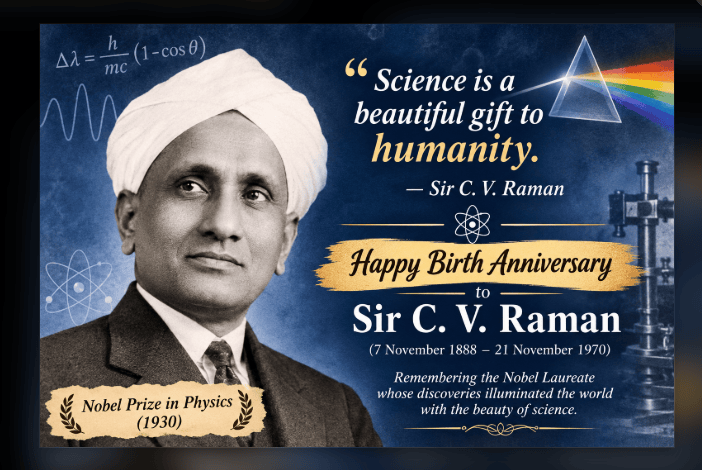
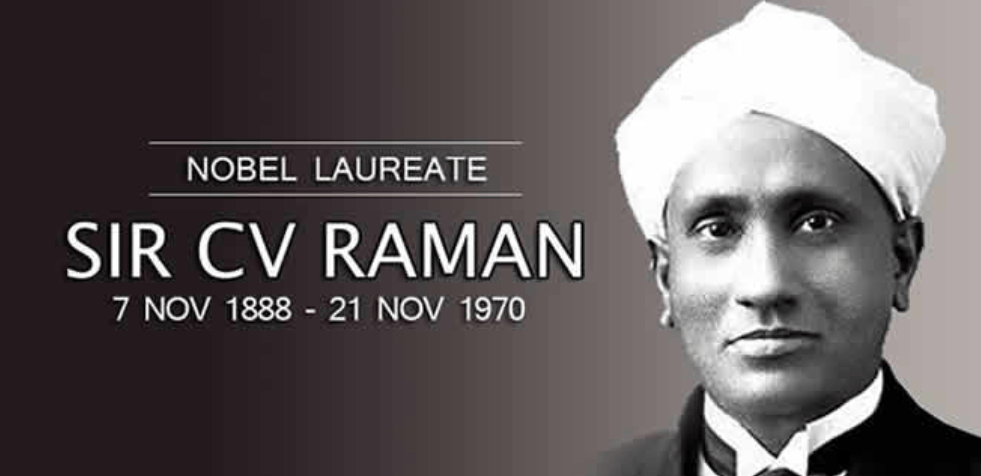
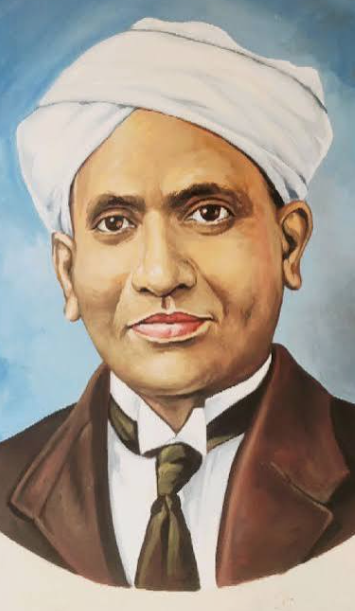
7th November – Celebrating the Birth Anniversary of Sir C. V. Raman: The Nobel Laureate Who Illuminated the World of Science
Hi all,
Greetings for the day😊 Life is Beautiful😊😊
“The essence of science is independent thinking, hard work, and not equipment.” – C.V. Raman
C.V. Raman
“Success can only come to you by courageous devotion to the task lying in front of you.” – C.V. Raman
C.V. Raman
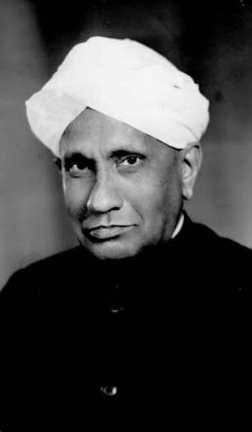
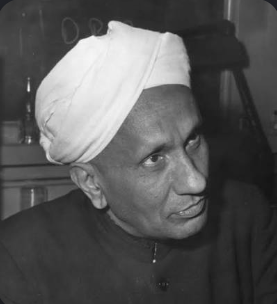
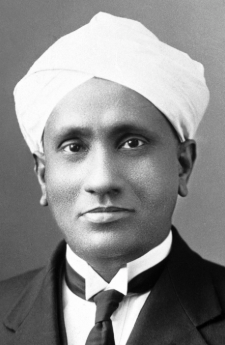
Chandrasekhara Venkata Raman was born on 7 November 1888 in Tiruchirappalli (Trichy), Tamil Nadu, India.
His father, Chandrasekhara Iyer, was a lecturer in Mathematics and Physics, while his mother was Parvathi Ammal.
He was the second of eight children in his family.
He studied at St. Aloysius’ Anglo-Indian High School in Visakhapatnam and passed his matriculation examination at the young age of 11.
In 1902, he joined Presidency College, Madras (now Chennai), where he earned his B.A. degree in 1904 with a gold medal in Physics and completed his M.A. degree in 1907 with the highest distinction.
He published his first scientific research paper at the age of 18 while still a student, in the British journal Philosophical Magazine in 1906.
Before becoming a full-time scientist, he worked as an Assistant Accountant General in the Indian Finance Department in Calcutta.
Despite his demanding government job, he conducted scientific experiments in the evenings at the Indian Association for the Cultivation of Science.
He was deeply fascinated by the sounds of musical instruments, particularly the veena, violin, tabla and mridangam, and investigated the science behind their sounds.
During his voyage from England to India in 1921, the deep blue colour of the Mediterranean Sea fascinated him and inspired his research into the scattering of light.
He was so dedicated to research that he even arranged a direct doorway between his residence and the Indian Association for the Cultivation of Science, allowing him to access its laboratory conveniently.
Apart from studying light, he also researched the colours of pearls, opals, agate and other naturally iridescent materials.
He conducted extensive research on diamonds, investigating their internal structure and optical properties.
In 1924, he became only the fourth Indian to be elected a Fellow of the Royal Society of London.
He founded the Indian Journal of Physics in 1926 to encourage scientific research and publications in India.
In his later years, he became particularly interested in the science of colour perception and how the human eye sees different colours.
Even two weeks before his death, he delivered his final lecture, demonstrating his lifelong dedication to science.
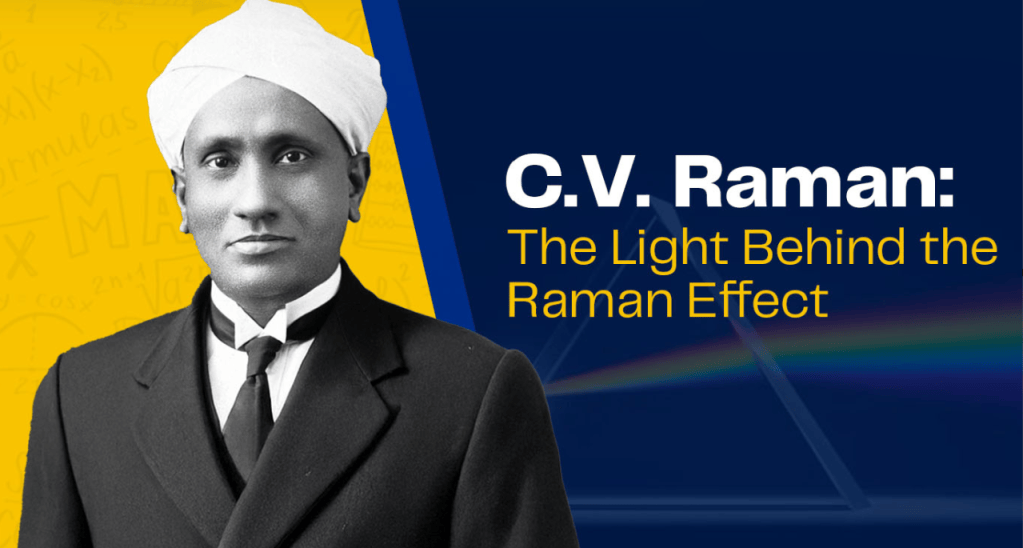
On 28 February 1928, he discovered the Raman Effect, a groundbreaking discovery in the study of light.
For this discovery, he received the Nobel Prize in Physics in 1930. To honour this achievement, India celebrates 28 February as National Science Day every year.
The first National Science Day was observed in 1987.
“I feel it is unnatural and immoral to try to teach science…” – C.V. Raman
The most important, the most fundamental and the deepest investigations are those that affect human life and activities most profoundly.” – C.V. Raman
📚Books Written by C.V. Raman
Molecular Diffraction of Light (1922) – It explains his investigations into the scattering of light by molecules.
Physiology of Vision (1968) – It discusses human vision and the perception of light and colors.
“The face of Nature as presented to us is infinitely varied, but to those who love her it is ever beautiful and interesting.” – C.V. Raman
✨Remarkable Achievements and Honors of Sir C. V. Raman✨
Nobel Prize in Physics (1930): He became the first Asian and first Indian to receive the Nobel Prize in Physics for discovering the Raman Effect.
Discovery of the Raman Effect (1928): He discovered that when light passes through a transparent substance, a small fraction of it changes its wavelength. This phenomenon became known as the Raman Effect.
Bharat Ratna (1954): He was honoured with India’s highest civilian award, the Bharat Ratna, for his outstanding contributions to science.
Knight Bachelor (1929): The British Government honoured him with a knighthood for his remarkable scientific achievements.
Lenin Peace Prize (1957): He received the Lenin Peace Prize in recognition of his contributions to science and society.
Fellow of the Royal Society (1924): He was elected a Fellow of the Royal Society of London, one of the world’s most prestigious scientific institutions.
Hughes Medal (1930): He received the Hughes Medal from the Royal Society for his outstanding contributions to physics.
Matteucci Medal (1928): He received this prestigious Italian scientific award for his research in physics.
Franklin Medal (1941): He was awarded the Franklin Medal by the Franklin Institute in the United States for his scientific contributions.
Established Raman Research Institute (1948): He founded the Raman Research Institute in Bengaluru to continue his research in physics.
Founded the Indian Academy of Sciences (1934): He played a major role in establishing this institution to promote scientific research and education in India.
Established the Indian Journal of Physics (1926): He founded this scientific journal to encourage and publish research in physics.
“The face of Nature as presented to us is infinitely varied, but to those who love her it is ever beautiful and interesting.” – C.V. Raman
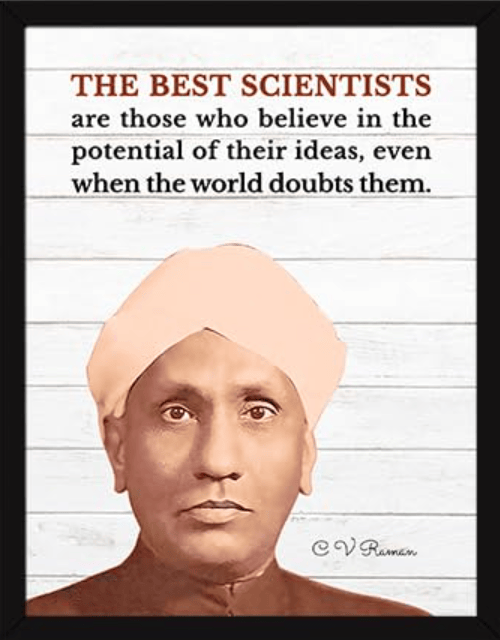
Quote by C.V. Raman
“Only those scientists who have labored, not with the aim of producing this or that, but with the sole desire to advance knowledge ultimately prove to be the greatest benefactors of humanity.” – C.V. Raman


Leave a Reply