Hi all,
Greetings for the day 😊 Life is Beautiful😊😊
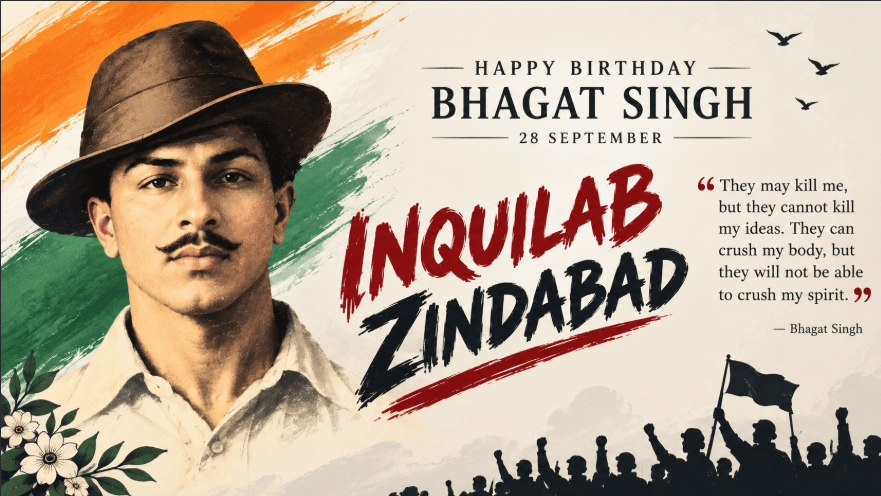
“They may kill me, but they cannot kill my ideas. They can crush my body, but they will not be able to crush my spirit” – Bhagat Singh
“The sword of revolution is sharpened on the whetting-stone of ideas” – Bhagat Singh
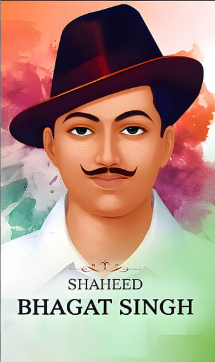
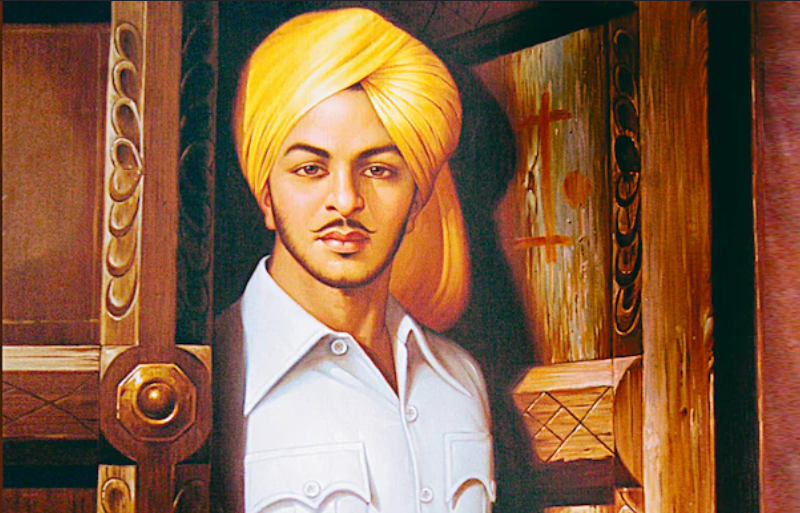
Veer Bhagat Singh
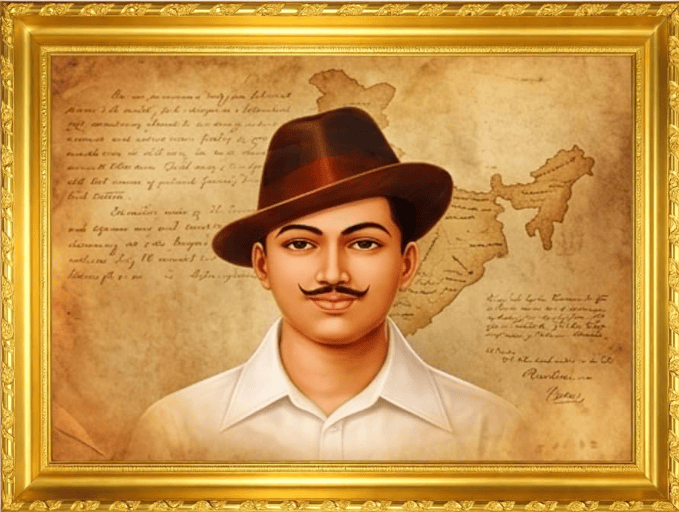
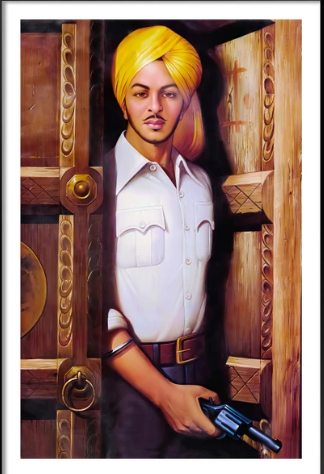
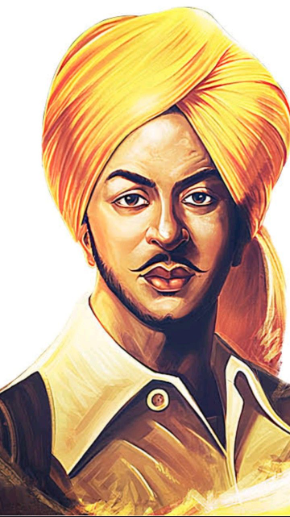
- Bhagat Singh (1907–1931) was one of the most prominent young revolutionaries of India’s freedom struggle. He was also a writer, journalist, thinker and political activist.
- He was born on 28 September 1907 in Banga village, Jaranwala tehsil, Lyallpur district, in undivided Punjab, which is now in Faisalabad district, Pakistan.
- His father was Sardar Kishan Singh Sandhu, and his mother was Vidyavati Kaur. His family had strong connections with the freedom movement.
- His uncles Ajit Singh and Swaran Singh were also involved in the struggle against British rule, which exposed Bhagat Singh to nationalist ideas from an early age.
- As a child, he developed a strong interest in India’s history and freedom struggle. He was known for his serious and thoughtful nature.
- He was an avid reader and developed a deep interest in history, politics, economics, philosophy and literature. Even in jail, he continued reading and writing extensively.
- He studied at National College, Lahore, founded by Lala Lajpat Rai. His education was not limited to textbooks; he learned greatly through books, newspapers, discussions and independent study.
- Bhagat Singh was also a writer and journalist. He contributed articles to publications such as Pratap, Kirti and Matwala, sometimes using pseudonyms such as “Balwant.”
- He never married. Although some accounts mention that he had been engaged, the marriage never took place. He chose to dedicate his life to the freedom struggle.
- In 1926, he helped establish the Naujawan Bharat Sabha, which aimed to inspire young people and promote political awareness.
- In 1928, following the death of Lala Lajpat Rai after a police assault during an anti-Simon Commission protest, Bhagat Singh and his associates became involved in the killing of police officer J. P. Saunders.
- On 8 April 1929, Bhagat Singh and Batukeshwar Dutt threw bombs in the Central Legislative Assembly in Delhi. They deliberately stayed at the scene and allowed themselves to be arrested so that they could use the trial to spread their political ideas.
- During his imprisonment, Bhagat Singh participated in a hunger strike demanding better treatment for political prisoners. He also continued reading and writing.
- His writings included “Why I Am an Atheist” and “To Young Political Workers.” His surviving Jail Notebook contains quotations and notes from numerous writers, philosophers and political thinkers.
- Bhagat Singh, Rajguru and Sukhdev were sentenced to death in the Lahore Conspiracy Case.
- They were executed on 23 March 1931 at Lahore Central Jail. Bhagat Singh was only 23 years old.
- After the execution, the authorities secretly took the bodies out of the jail instead of allowing the families to conduct the final rites publicly.
- The bodies were taken toward Hussainiwala, near Ferozepur, where the authorities began secretly cremating them near the Sutlej River.
- Local people discovered what was happening, and the authorities reportedly left the site. The remains were recovered by people who had gathered there.
- The remains were then given further last rites, and a large public farewell followed. This is why accounts sometimes describe two stages of the cremation/last rites.
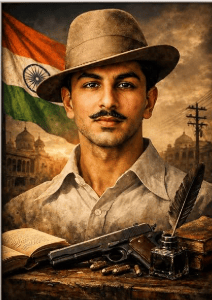
“Merciless criticism and independent thinking are the two necessary traits of revolutionary thinking” – Bhagat Singh
📖 The Writings of Bhagat Singh
- Why I Am an Atheist – one of his best-known essays, written in 1930 while he was imprisoned.
- To Young Political Workers – a letter written on 2 February 1931, discussing revolution, political organisation and the future direction of the freedom movement.
- The Jail Notebook – a collection of his handwritten notes and quotations from books he read in prison. It is not a conventional book written by him, but an important record of his intellectual interests.
- Introduction to Dreamland – an introduction written by Bhagat Singh for Ram Saran Das’s revolutionary work Dreamland.
⭐ Beyond the Legend: The Lesser-Known Bhagat Singh
- He did not complete a university degree; he left formal education to devote himself to the freedom movement.
- He used several pseudonyms, including Balwant, Vidrohi and Ranjit, while writing for newspapers and revolutionary publications.
- He once disguised himself by cutting his hair and shaving his beard to avoid being recognised after the Saunders case.
- He was deeply influenced by Irish, Russian and French revolutionary literature, not only Indian nationalist writings.
- His Jail Notebook contains hundreds of handwritten notes and quotations, showing the enormous range of his reading.
- He read Bertrand Russell, Charles Dickens, Victor Hugo, Karl Marx, Friedrich Engels, Lenin and Dostoyevsky, among many others.
- His famous essay “Why I Am an Atheist” was written in jail, partly in response to claims that his atheism came from arrogance.
- He was interested in economics and workers’ rights, not merely India’s political independence.
- He helped establish the Naujawan Bharat Sabha in Lahore in 1926, aimed at mobilising young people.
- He had originally wanted to study agriculture and become a writer, according to accounts of his early life.
- His Jail Notebook was not intended as a diary; it was primarily a collection of quotations, ideas and notes from his reading.
- He wrote an introduction to Ram Saran Das’s Dreamland, although the work itself was not written by Bhagat Singh.
- During the Assembly bombing, the bombs were deliberately designed to avoid causing mass casualties, according to the statement presented by Bhagat Singh and Batukeshwar Dutt.
- He and Batukeshwar Dutt did not try to escape after the Assembly bombing; they stayed and were arrested.
- He was only 23 years old when he was executed.
“The sword of revolution is sharpened on the whetting-stone of ideas” – Bhagat Singh
“Inquilab Zindabad!”
“Long live the revolution”
Thank You😊 Have a great time ahead😊😊


Leave a comment